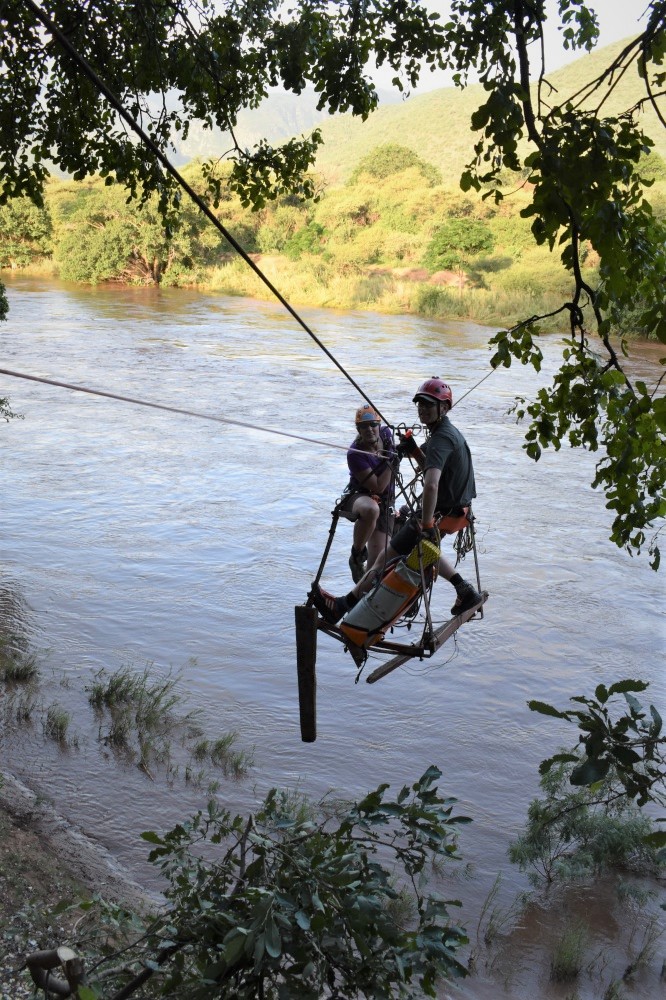
The river raged below me as I balanced myself precariously on the metal skeleton of a an old cable car, suspended over the water from a rusty steel cable. My feet dangled above the angry torrent of muddy water that raced below me as I waited for the team on the far side of the river to reset the rope for the next pull. Despite the urgency of the situation, I smiled, felt peace and my heart was full of joy. My quest for adventure had, once again, exceeded my expectations.
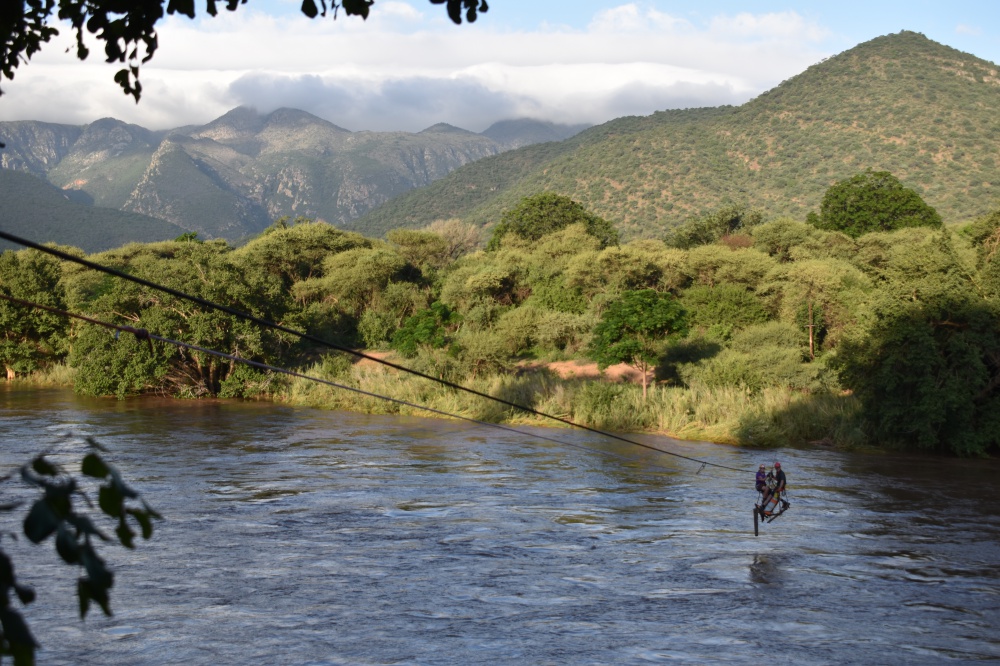
My husband, Chris, and I were the last to evacuate over the flooded Olifants River where it flows through the Wolkberg Mountains in the northeastern region of South Africa. Just two days prior, the river was only a quarter as wide and ankle deep when we crossed it on our way to our campsite. Some locals and a few friendly cattle joined us in the shallow water as we splashed to the far shore. Now, it was flooded, and we were finally being pulled to safety after hours of creative problem-solving and manual labor. Neil, a local climbing guide and good friend, was leading the team on the other side.
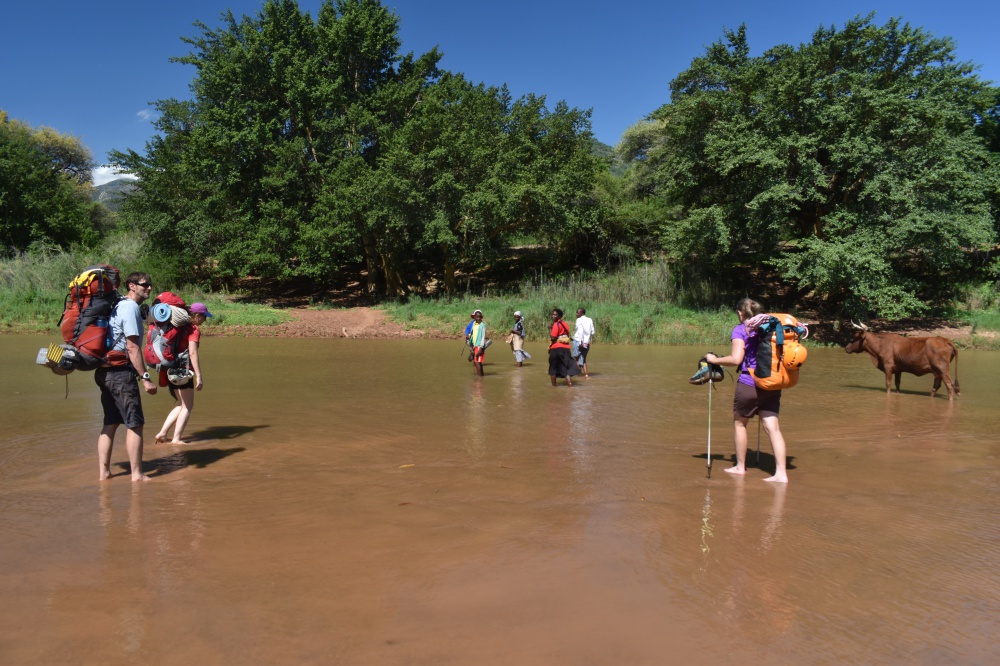
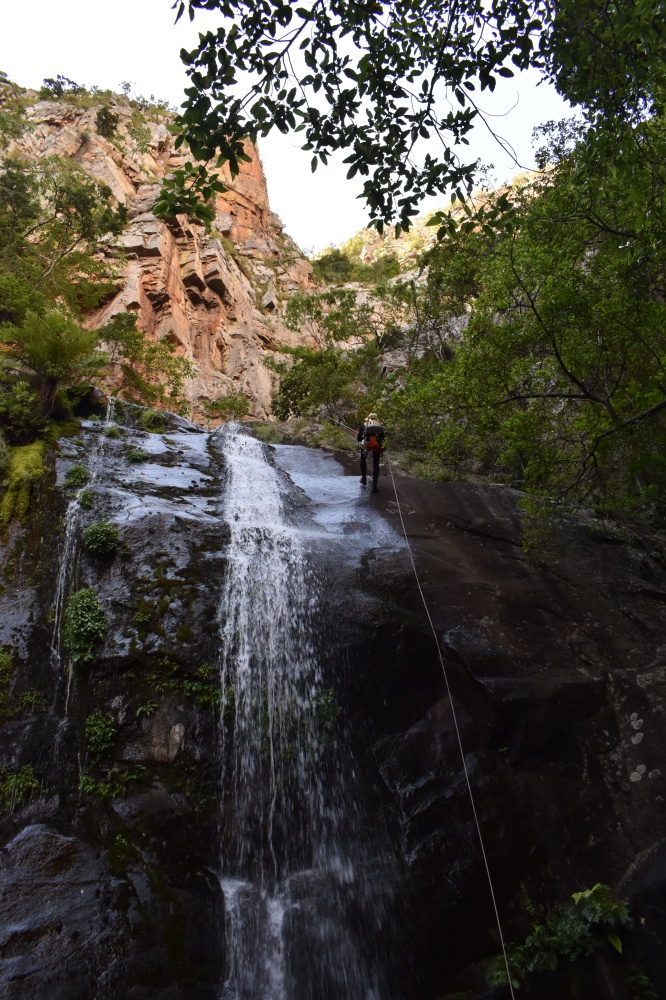
Our goal for this weekend had been to do the first-ever descent of Sekororo Canyon, or kloof, as it is called in South Africa. We were on a technical canyoning adventure and were prepared with ropes, harnesses, helmets and other equipment that would facilitate a safe descent of this vertical canyon and the waterfalls that flow through it. The plan was to hike in, camp, spend a full day in the canyon, return to camp and hike out the third day.
As expected, our day in the canyon was long and exhausting. The beams of our headlamps lit the faint trail ahead of us as we wearily stumbled into camp long after the sun had set. There was a brief debate about whether our day would classify as “epic” before we all melted into our tents for the night. Neil suggested that an epic day is when you need to turn on your headlamp. Roger said it is when you are too tired at the end of the day to even brush your teeth before bed. The energy on the topic faded, and the default consensus was that the day was almost, but not quite, epic.
Today, the third day, was supposed to be easy and relaxed with only a 3 ½ hour exit to our car, which was parked in the dusty yard of a humble hut in the neighboring village. We took our time and left camp mid-day. After about an hour of walking, the swollen river came into view. We forced our way through hostile bushes that threatened us with their piercing thorns and assessed the situation. The turbulent water was an ominous barrier between us and civilization. Swimming was not an option and today, was indeed, going to be epic.
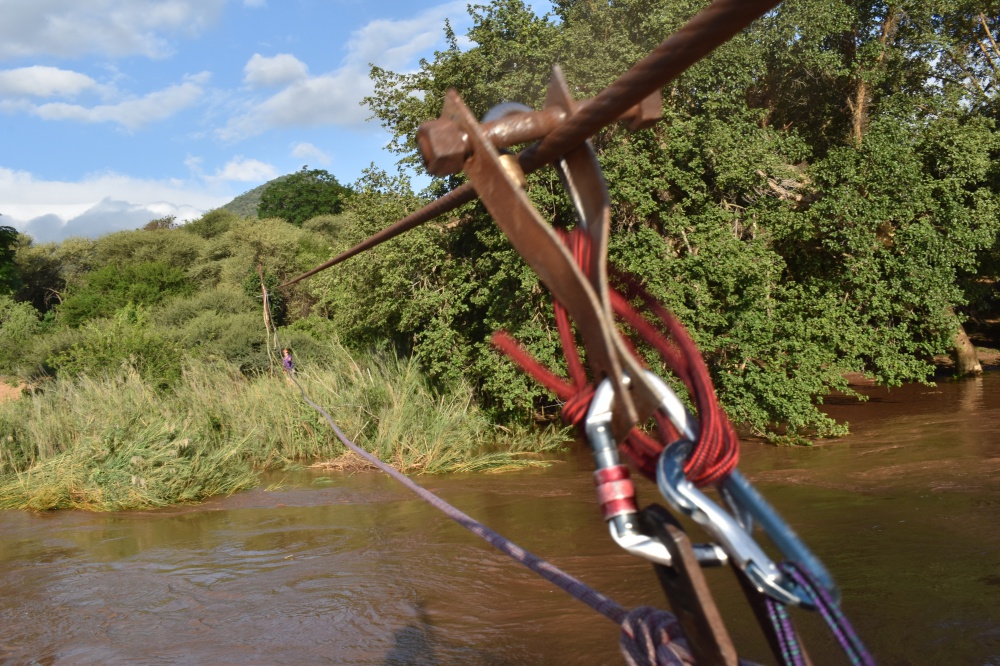
Other hikers who had been camped near us were already at the river and in action. They had managed to tighten the steel cable that spanned the river, which just hours before was still thrashing in the rapids. The abandoned cable car had been found lying nearby amongst the scrubby trees, guarded by thorny bushes. The long and narrow rusty steel plates were loosely bolted together, only slightly resembling what it once was. The cable car now hung lopsided from the steel cable, partially on a steel carabiner, but mostly on a steel bolt. As we were setting our packs down on the riverbank, the first group of three was struggling to ascend the last 10 meters of cable on the opposite bank, pulling the cable car uphill with all their strength. Two other members of their group, and their four dogs, relaxed in the shade on our side of the river.
One member of the group on the other side began his return, battling against the friction of the steel bolt as it scraped across the cable. After every 5 meters of pulling himself across, he stopped to rest. By the time he arrived, our 200 meters of rope was prepared. Neil slid on his harness and struggled up onto the rickety cable car. We passed up his pack and one hundred meters of rope. The other hundred meters of rope would remain on our side of the river to pull the cable car back. As there was not yet a rope attached from the other side of the river, Neil, like the group before him, would have to use his own strength to struggle hand over hand across the entire length of the eighty meters of cable.
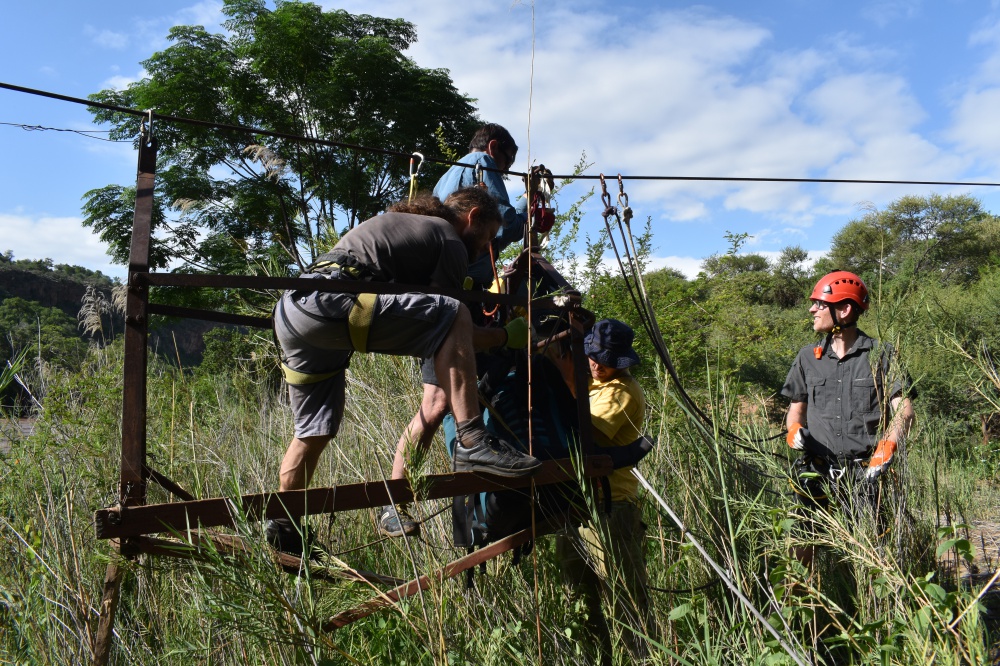
Once we had the ropes attached, the evacuation process accelerated. It took at least 5 more trips, as we were careful not to overload the cable or the steel bolt that the cable car depended on. The dogs traveled across the river in empty backpacks that had already been unloaded on the other side. Eventually, it was just Chris and I remaining on the far side of the river, completely detached from civilization.
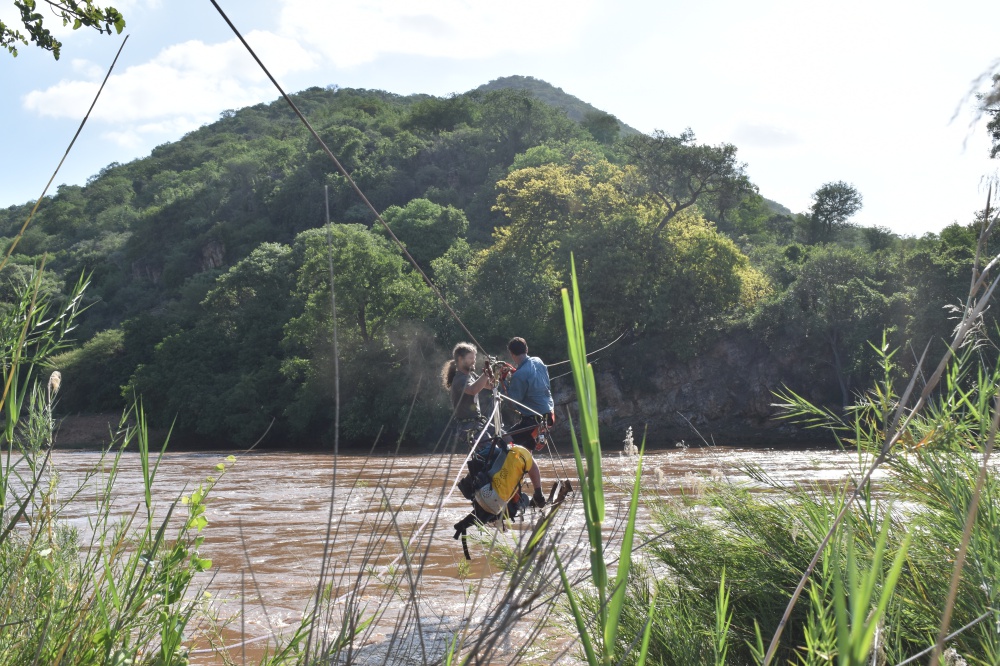
We gathered our gear and ropes, clambered onto the basket and signaled that we were ready. The speed and power of the first pull took us by surprise, and we both fell off the basket and dangled in the air. Luckily, we were wearing harnesses and were additionally attached to the steel cable. We adjusted and signaled that we were ready again.
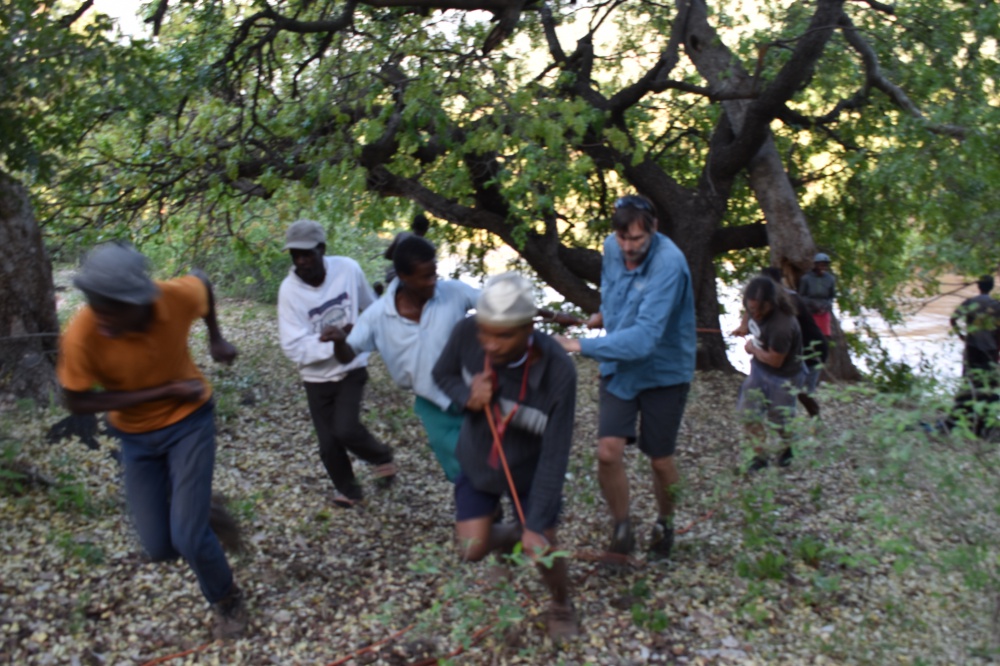
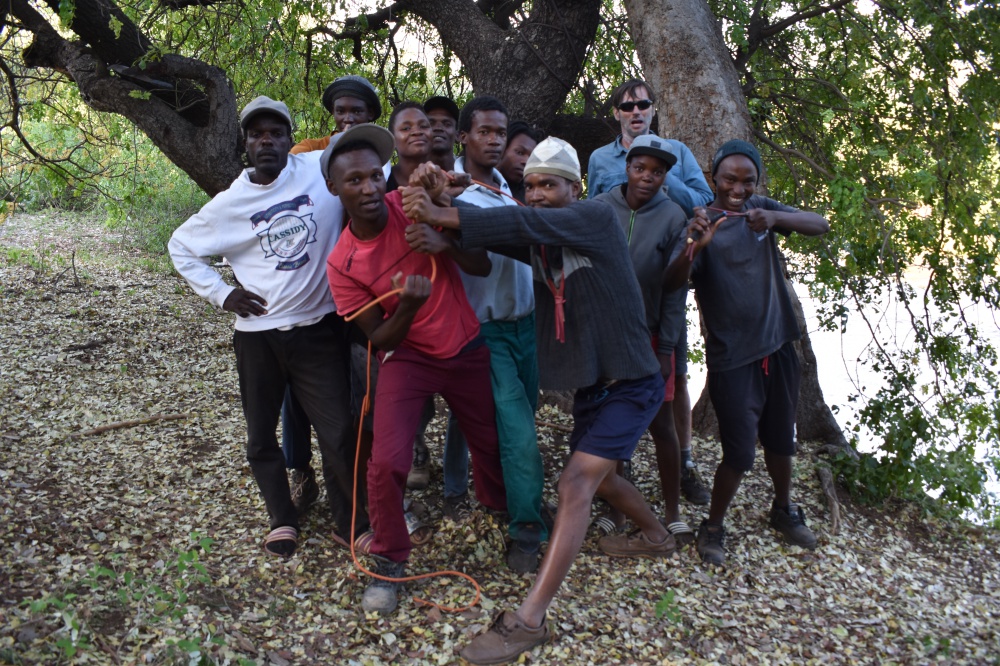
The powerful pull was generated by 10 or more local villagers, strong from a life of manual work without modern comforts. They had wrapped the rope around a long stick and ran with it away from the river, side by side, generating a burst of power. A special piece of gear called a Petzl Micro Traxion would hold the rope in place as they readjusted and ran again. There was plenty of time spent suspended above the river between pulls to study the fascinating current in the brown water as it raced beneath our feet.
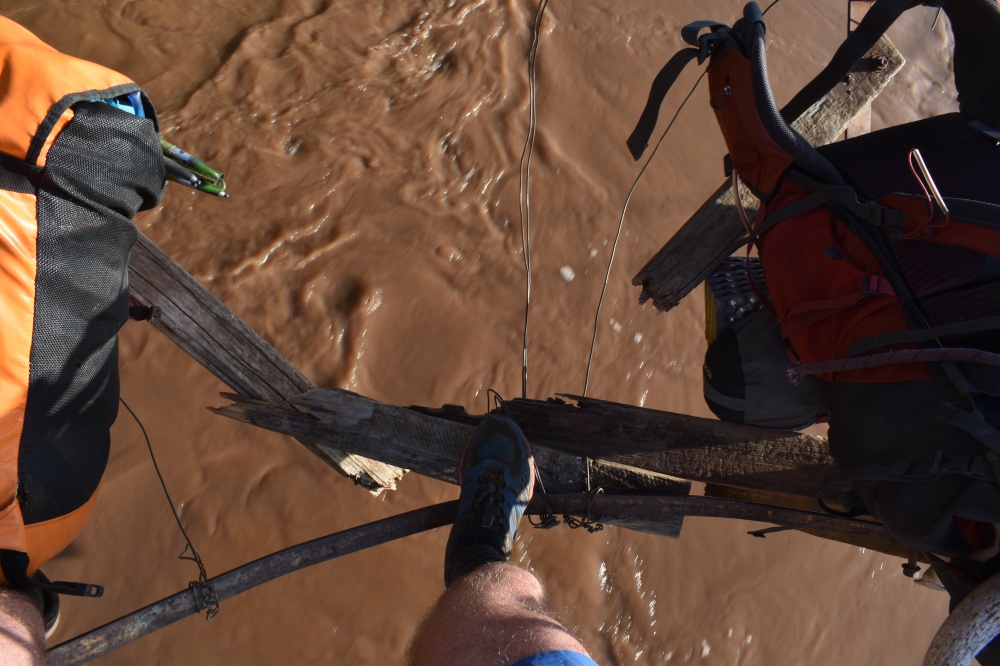
Engulfed by the resulting cloud of dust as we crossed the river, the cable had been sawing through the bolt throughout the evacuation effort. A pungent smell of burning steel hung in the air. The girth of the bolt where it ran along the cable was now about half as large as it originally was. The banks of the river were growing increasingly shady as the sun dipped lower on the horizon. Luckily, this was the last trip the cable car would make across the river. We finished the evacuation just before dark.
As we arrived on the other side of the river, all were jubilant. This was teamwork in its purest sense. It was if we had all just flawlessly performed an orchestra masterpiece, without even knowing which instrument the other was playing. We had been strangers, but on this sunny afternoon, we were united for a purpose. And together we were successful.
Adventure is beauty that first presents itself in villain’s clothing. The first few times we encounter it we are scared, nervous and untrusting. But then we pull through it, and on the other side we encounter accomplishment, fulfillment and elation. It forces us to acknowledge our vulnerability and to realize our capability. Most of us seek adventure in one form or another, and sometimes, true adventure finds us.
 AdventureGoGo by Brittany Haas