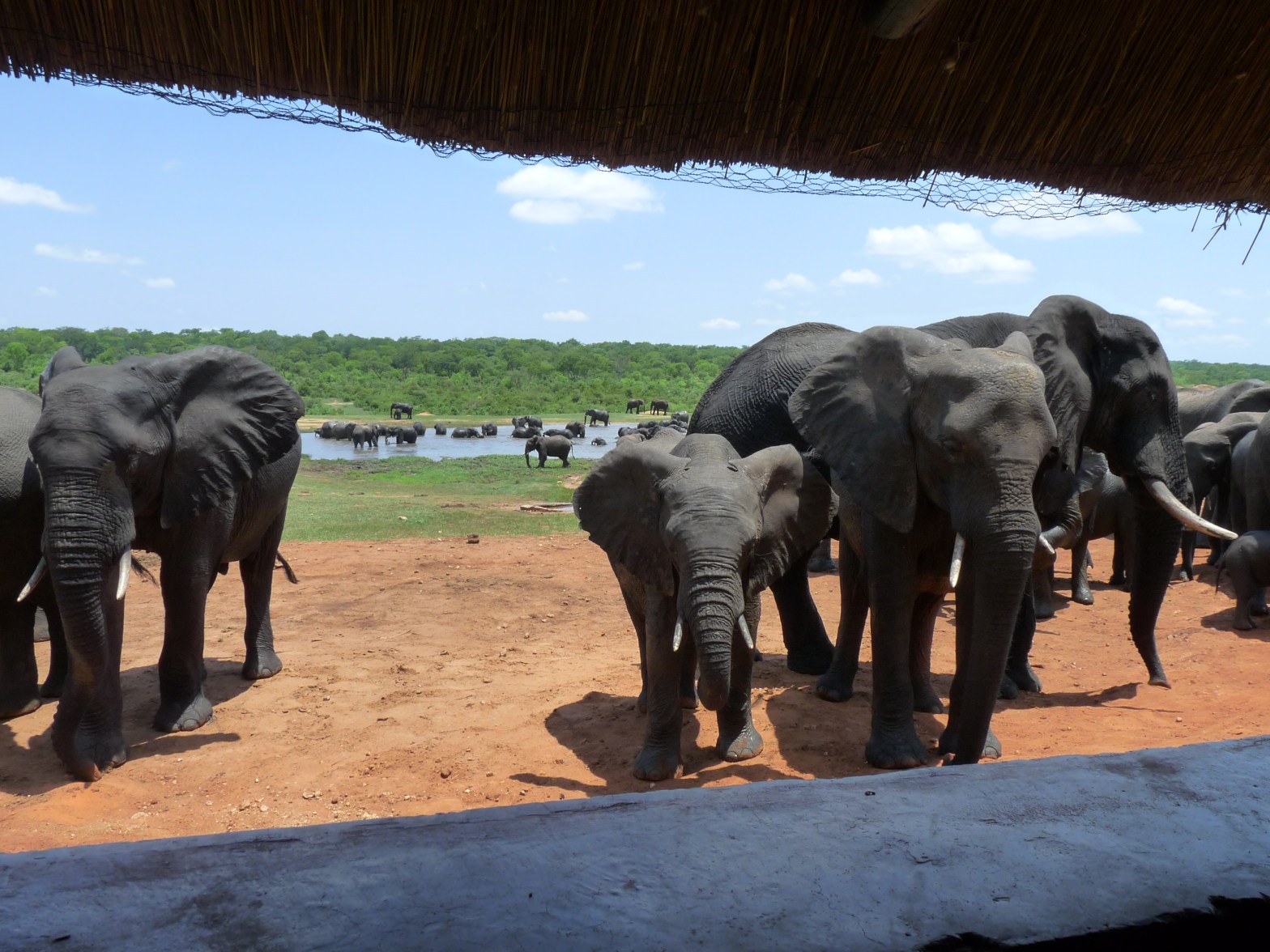
As I sat under the open thatched roof, supposedly concealed from the elephants’ view, I sneezed. An elephant, just a meter away, heard something. As the elephant glanced in our direction, we could sense his growing agitation. He fidgeted and flapped his ears rapidly, as if he was preparing to take flight. My husband, Chris, and I glanced at each other from across the hide with concern. The tension mounted as we pondered the elephant’s next move.
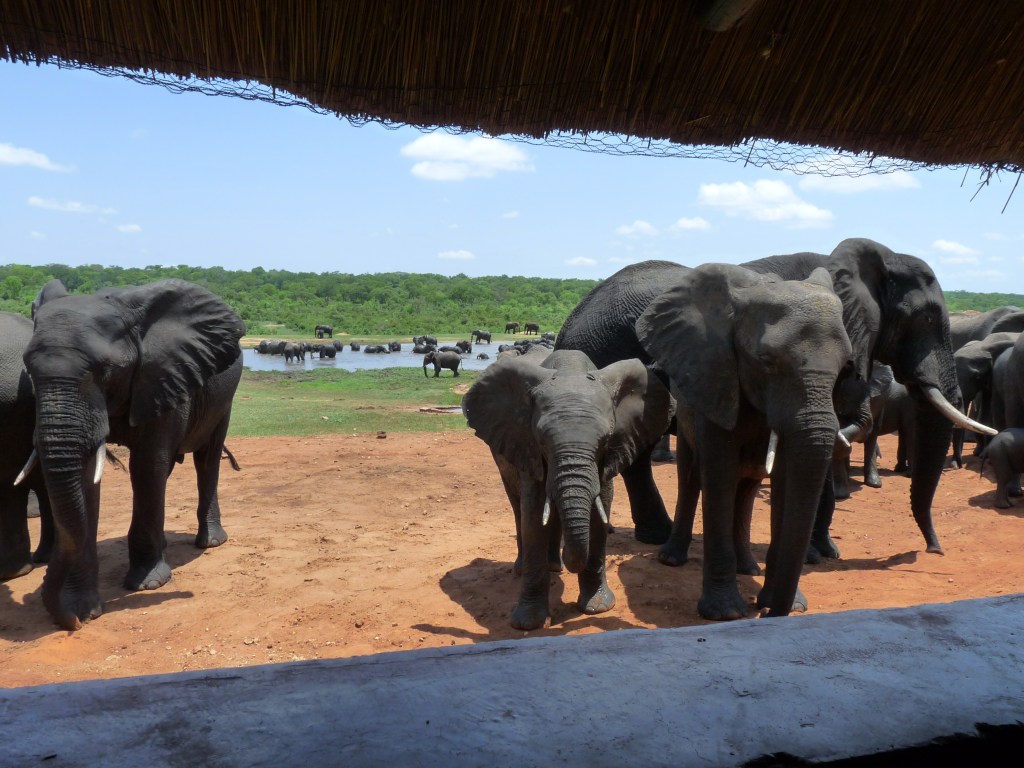
The elephant slowly raised his foot and let it drop with force into the dirt. He was back to digging in the dirt, along with all the other elephants. We released a breath of relief.
We were in Zimbabwe on Christmas day. Our holiday cheer was brought to us in the form of about 200 elephants that were right in front of our noses.
Earlier that morning, we finished our scrambled-egg breakfast and carefully folded away our hard-top roof tent, intent on spending the day in neighboring Hwange National Park. Despite the park’s close proximity to our campground, the road layout would require us to drive about 20 minutes to the entrance gate. As we departed camp and drove less than a soccer field from where we slept the night before, the first elephant crossed the dusty road front of us. We stopped and waited, but then another came and another.

Our jaws dropped almost to the sand beneath our white Ford Ranger pick-up truck, referred to as a “bakkie” in South Africa, as we watched elephant after elephant emerge from the scrubby bushes and cross the road in front of us. Some were just 20 ft. away from us and others further. “We must be close to 100 elephants by now,” my husband said in disbelief. The elephant procession continued.
Eventually the crossing elephants became sparser, like the sprouting of popcorn kernels does when the batch is ready to be removed from the stove. The elephants must be headed to the water hole near our campsite, where we could hear elephants playing when we arrived in the still of the previous night. That stillness had been interrupted when a fight between lions and elephants broke out just 20 meters away from our tent.
We waited until the elephant parade stopped, turned the car around and returned to camp for the show. The water hole was visible from our campsite and there was even a viewing deck we could get up onto for a better view. A 5-minute walk to the adjacent lodge and a brief stroll down a winding shady path led us straight to front-row VIP seats in the water hole’s hide.
Hides are common in Africa’s national parks and reserves. They are simple wooden buildings that are meant to conceal humans, allowing undisturbed game viewing. They are often located at a water hole or along a river. Hides are open air with a low roof and a large opening for the viewing.
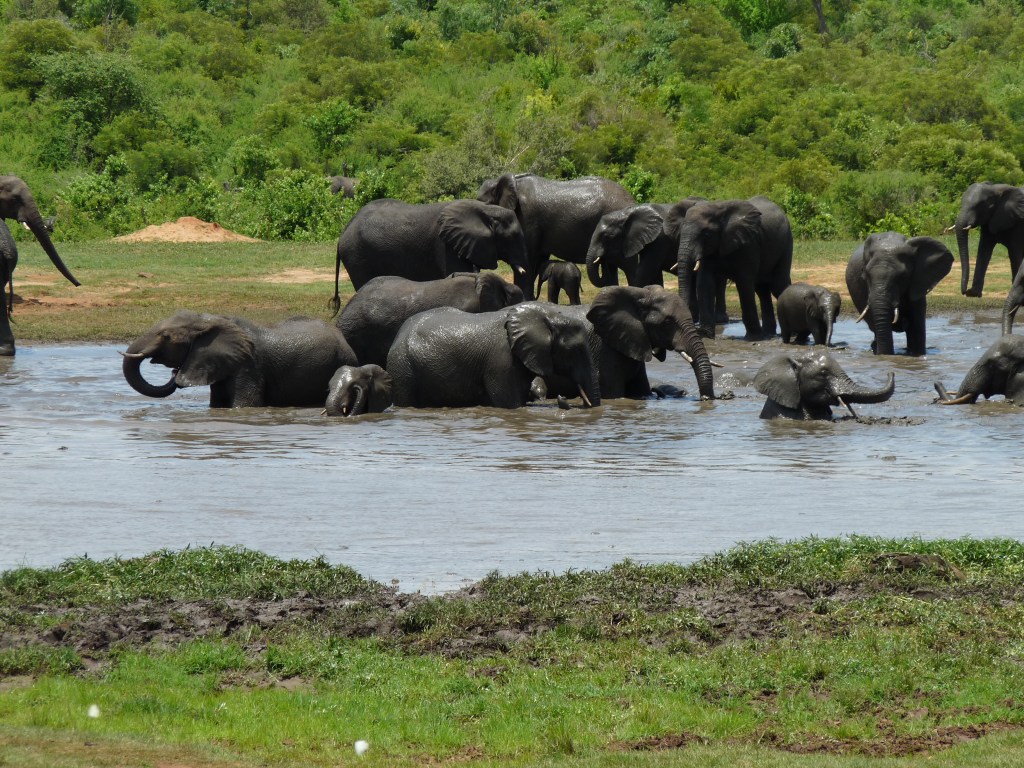
The first family of elephants was already frolicking in the water when we arrived. A baby flopped over into the water, thrust its legs into the air and sprayed water onto a nearby adult female. A teenager tried diligently to topple another adult, who eventually seemed to succumb voluntarily for a refreshing soak.
It didn’t take long before the rest of the elephants arrived. Elephant family after family entered the water hole as it filled up like the wave pool at a water slide park does just before the action begins. The scene was just as rowdy as it was lively. A teenager rolled ferociously in the mud, two males fought for no evident reason and countless babies clumsily splashed and flopped. We were immersed in the experience, trying not to blink, so as not to miss any of this magical experience that unfolded before us.
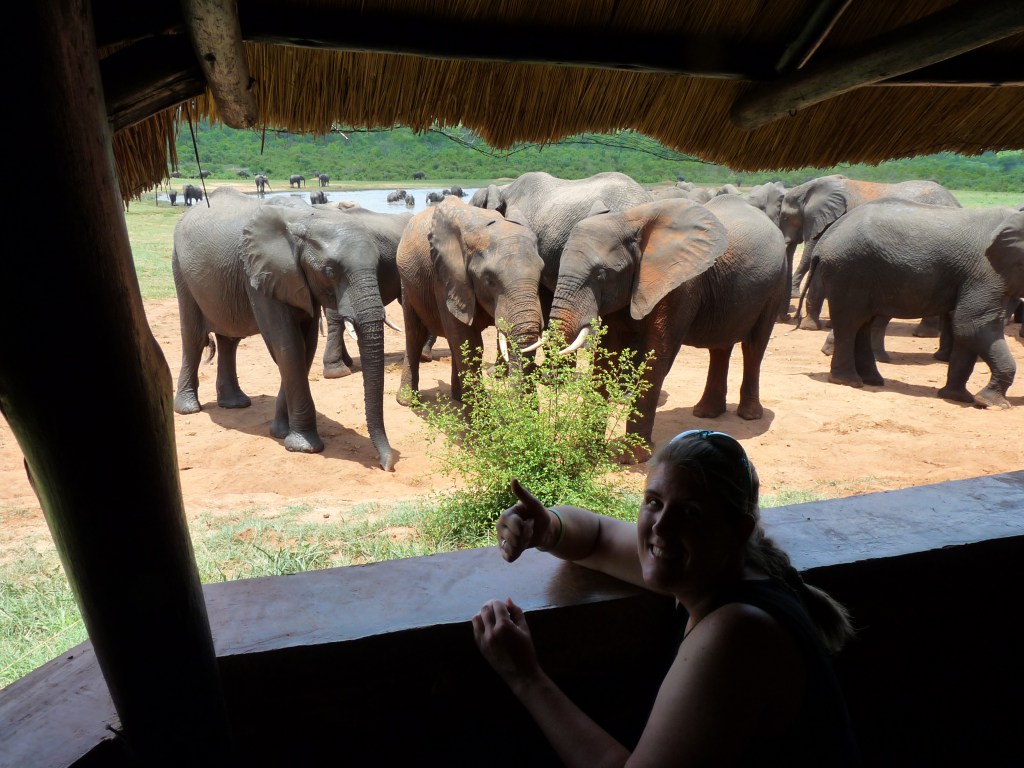
As the elephants tired of their aquatic playground, they gradually started to emerge onto the parched dirt between our hide and the water hole. They dug in the dirt with their feet and trunks as they continued to move closer toward us. It wasn’t long before I was within two meters of probably 50 elephants. A mid-sized car parked lengthwise couldn’t even fit between us.
Binoculars were no longer necessary, and we were in awe as we examined their almost human mannerisms. We watched the nurturing relationship between mother and baby, rambunctious teenagers annoying their parents and the occasional grumpy elephant demanding more personal space. I was particularly perplexed by one elephant who seemed to be eating rocks.
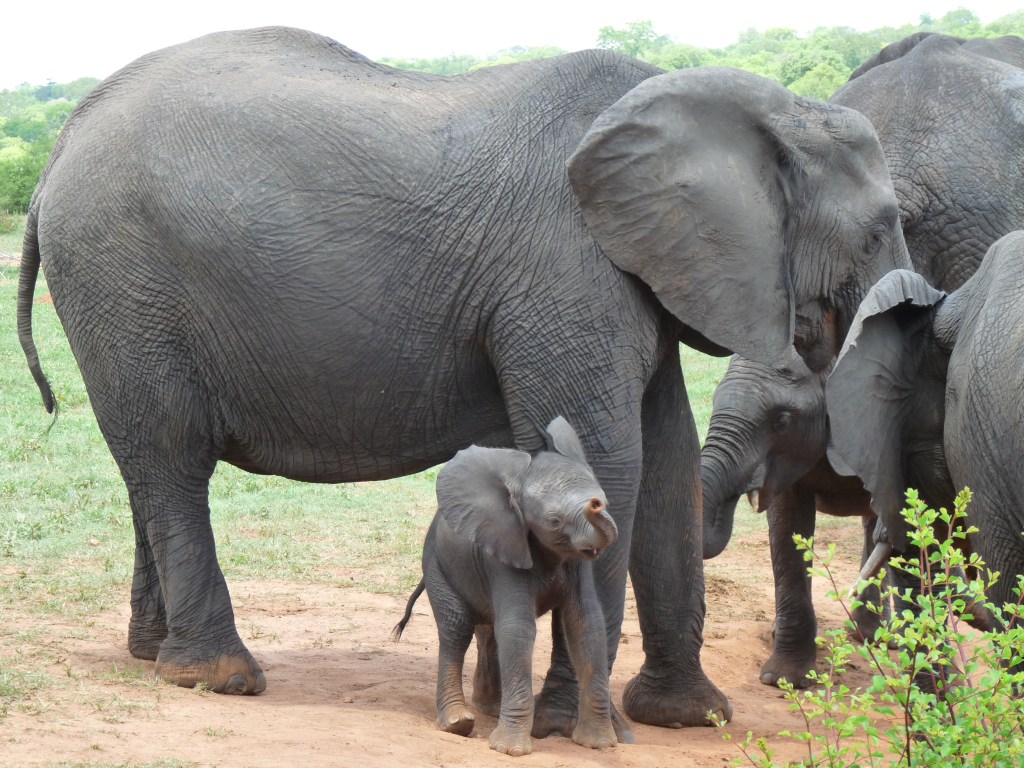
Then there was the elephant that I swore knew we were there. It was hard to imagine they couldn’t see us. We were right in front of their noses. This elephant looked over from time to time and we seemed to lock eyes. I held my breath. My first instinct is no longer to pull out a camera when I see wildlife. Instead, it is to stop and observe. The goal is always eye contact. I crave the moments when we interact, we acknowledge each other, and we wonder about each other.
While our families were all home opening presents under the tree, enjoying a late breakfast casserole in their pajamas, cleaning up wrapping paper and then eating again, we remained in the hide for hours, hesitant to move for fear of disturbing the magic. A small bag of mixed nuts was our Christmas supper as we watched the most enchanting Christmas present of our lives.

As we returned to our campsite, we learned from staff that the fight between elephants and lions the night before had been a tie. The employees had searched the grounds for any remnants of the fight and found none. The lions would, undoubtedly, be back in search of baby elephants. As we ate breakfast the next morning before beginning our journey north toward Zambia, the lions returned.
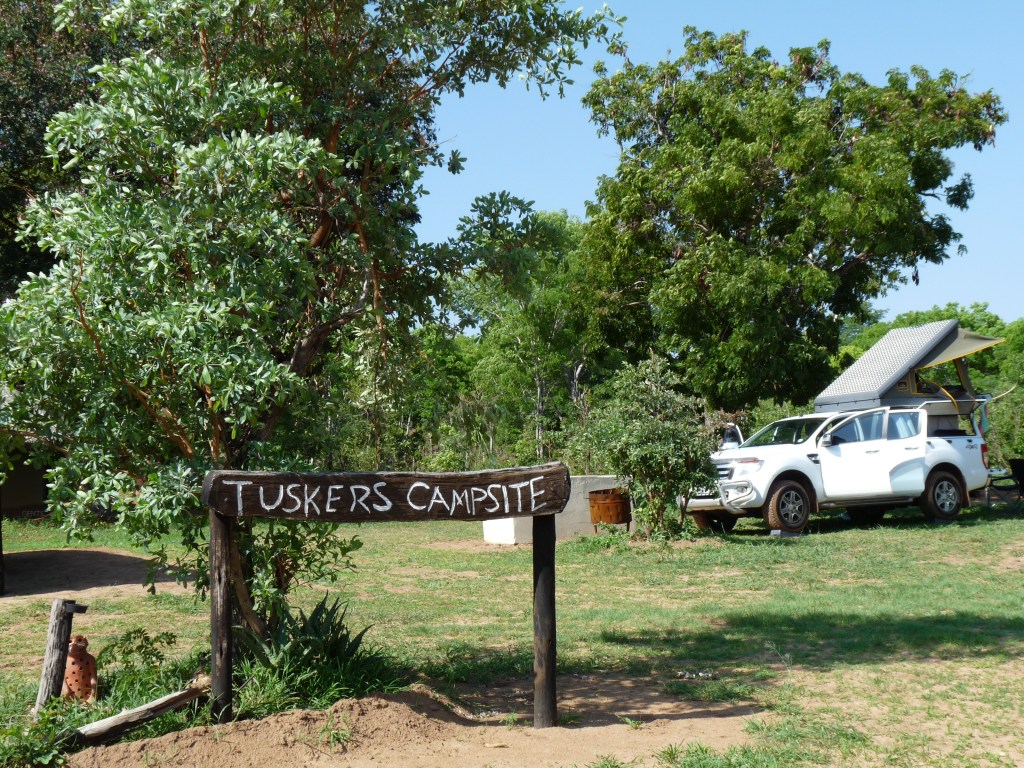
We drove away from the appropriately named Tuskers Campsite with an intense gratitude for our experience. Our lives had been enriched and our encounter with the elephants would remain etched in our memories forever. Whether or not the elephants knew or cared we were there, will always remain a mystery. Regardless, we were certain that they gave more to us than we gave to them that Christmas day.
 AdventureGoGo by Brittany Haas